ДЕЛОВЫЕ ЭМИРАТЫ
116 НЕДВИЖИМОСТЬ, БИЗНЕС, ИНВЕСТИЦИИ
УКРАИНА-ОАЭ
THE ANCIENT LANDOFTAVRIDA
EDGEDWITHTHETURQUOISE
WATERSOFTHE BLACK SEA
IS BEAUTIFUL ANDUNIQUE.
THE LINKCONNECTING FIRST
SETTLERSANDUSWHO LIVE
ONTHE SUNNY PENINSULA
TODAYHAS STRETCHEDOVER
THEMILLENNIA. CRIMEA IS
COMMONHOME FORMANY
NATIONALITIES LIVING INTHIS
BEAUTIFUL COUNTRY. ITHOSTS
MORETHAN 80NATIONALITIES,
THE LARGESTOFTHEMBEING
RUSSIANS, CRIMEANTARTARS,
ANDUKRAINIANS. THE
PERCENTAGEOFOTHER ETHNIC
GROUPS – BYELORUSSIANS,
GREEKS, BULGARIANS,
GERMANS, ARMENIANS,
KARAITES, KRYMCHAKSAND
HEBREWS IS SMALL BUT
ALTOGETHERTHEY PRESENT
UNIQUEUNITYOFTHE ETHNIC
AND RELIGIOUS COMPOSITION
OF CRIMEAN LAND.
In the ancient times, populationof Crimea
was composedof Scythians, Taurus andGreeks.
During this time, the cities of Panticapaeum,
Chersonese, Kerkinitida and ScythianNaples
werebuilt here. Indifferent eras, this areawas
populatedby Romans, Byzantines andGenoeses.
Tartars came to livehere in13 - 14th centuries.
The number of people that increased after
the annexation of Crimea to Russia reduced
dramatically during the Crimeanwar in 1854
– 1855, when approximately 150 thousand
Crimean Tartars and 5 thousandNogaytsy left
the peninsula. Out of 687 Crimean settlements,
315were deserted. However, by early 20th
century, the population of Crimea reached 545
thousand peoplewith the largest percentage of
state peasants including Russian andUkrainian
migrants. In 1913, the population reached 729
thousand people. By the beginning of the
WorldWar II the number almost doubled – 1
million 127 thousand people.
After the political storm that raged over the
country, after the executions and repressions,
after the times when thousands of peoplewere
sent to concentration camps inGermany, after
the deportation of Tartars, Bulgarians, Greeks
and other people the population of Crimea
reduced almost by one third.
Thehighest growth rateswere
observed in thepopulationof the
peninsula in1985 - 1993. Average annual
growth rates over this periodwere–1.5%.
In1990s, thenumber of CrimeanTartars
increased seriously and reached250
thousandpursuant toofficial data.
The returnof theMuslim component to
Crimea set the foundation for restorationof
theold cult structures of theMuslims and
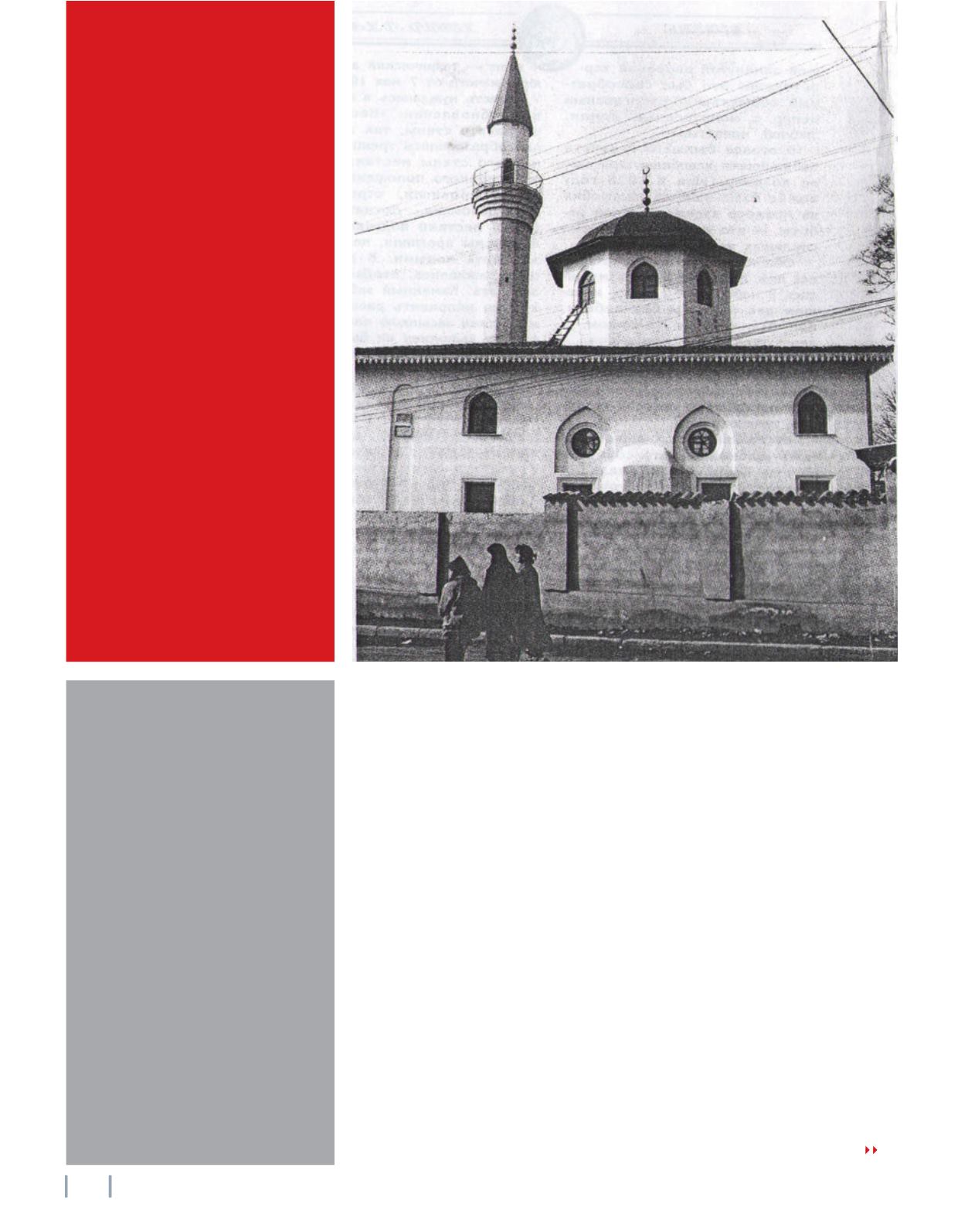
constructionof thenewones. Oneof the
restoredmosqueswas Kebir-Jamimosque
in Simferopol, theCapital Cityof Crimea.
Thismosquewas not just the architectural
monument of the16th centurybut also the
important city-forming facilityof the former
medieval settlement of Ak-Mechet.
Kebir-Jami was built in1508, which
factwas confirmedby theplate above the
entrancewritten inArabic language and
indicating the year of construction.
Kebir-Jami mosque is a prominent
architectural monument in Simferopol and
the oldest building in the city. Thewriting
at the entrancemade inArabic language
said: “Thismosquewas built for theGlory
of theMightiness of the Khan Sultan-
Mengli-Girey Abdurakhmann-bin-Ali,
MUSLIM
MOSQUES
of Crimea


